Uncategorized

Winter Falls in Older Adults: When a Slip on the Ice Is More Than “Just a Fall”

Winter in North Dakota is not for the faint of heart—especially for older adults. Icy sidewalks, slick parking lots, and snow-packed entryways increase fall risk dramatically. While a minor slip might sound harmless, evidence shows that winter falls in older adults are often far more serious than they appear.

Recent clinical insights from trauma specialists at Mayo Clinic highlight a critical reality: even low‑impact falls during winter can lead to life‑threatening injuries in older adults. Understanding why this happens—and how to prevent it—can save lives.

Why Winter Falls Are Especially Dangerous for Older Adults

Falls are already the leading cause of injury among adults age 65 and older—but winter conditions significantly amplify that risk.

As we age, several factors increase the likelihood of serious injury from a fall:

  • Reduced bone density increases fracture risk
  • Slower reaction time limits the ability to recover balance
  • Reduced muscle strength makes it harder to stabilize during a slip
  • Chronic conditions or medications (such as anticoagulants) can worsen outcomes

When ice is added to the picture, even a simple stumble can result in:

  • Hip fractures
  • Traumatic brain injury (TBI)
  • Internal bleeding
  • Loss of independence
  • Increased mortality within the following year

Trauma clinicians emphasize that outdoor winter falls—particularly onto ice or frozen ground—create higher impact forces, making injuries more severe than falls that occur indoors.

Why Head Injuries Often Go Unnoticed

One of the biggest dangers of winter falls is how deceptively mild they may seem at first. Many older adults are able to stand back up and feel “okay,” leading them to delay or avoid care.

However, head injuries can evolve slowly, especially in individuals taking anticoagulant or antiplatelet medications. Symptoms may not appear immediately and can worsen hours or days later.

Warning signs after a fall include:

  • Headache or pressure
  • Confusion or memory changes
  • Dizziness or balance problems
  • Increased sleepiness
  • Nausea or vomiting

Any head impact during a winter fall should be taken seriously.

The Ripple Effect: How Falls Threaten Independence

For older adults, the impact of a fall often extends far beyond the initial injury. A single winter fall can result in:

  • Hospitalization and prolonged recovery
  • Transition to rehabilitation or skilled nursing care
  • Loss of confidence and increased fear of future falls
  • Reduced activity and social isolation

In many cases, a fall becomes a turning point—shifting someone from independent living to needing ongoing support.

Practical Tips to Reduce Winter Fall Risk

While winter conditions can’t be avoided, fall risk can be reduced with intentional strategies:

  • Wear footwear with good traction and avoid smooth soles
  • Keep hands free when walking outdoors
  • Move slowly and deliberately on icy surfaces
  • Use assistive devices when recommended
  • Review medications and vision regularly
  • Maintain strength and balance through safe activity

Caregivers can also help by checking walkways, advocating for timely snow and ice removal, and encouraging evaluation after any outdoor fall.

    Learn More: Mayo Clinic Resource on Geriatric Winter Falls

    This article was informed by trauma care guidance from the Mayo Clinic, which offers an excellent overview of why winter falls are especially dangerous for older adults and how clinicians assess these injuries.

    👉 Read more from Mayo Clinic: Geriatric winter falls: When a simple bump on the ice can be serious

    We encourage caregivers, clinicians, and older adults to review this resource for additional clinical perspective.

    Why a Cup of Beans a Day Could Boost Your Heart Health

    Introduction:
    Could something as simple as adding beans to your daily meals improve your heart health? According to new research presented at the American Society for Nutrition’s annual meeting, the answer is yes. A recent study shows that eating just one cup of beans each day can deliver measurable benefits for heart and metabolic health—especially for those at risk of chronic conditions like heart disease and type 2 diabetes.

    Body:
    The 12-week study followed 72 adults with prediabetes, a group often dealing with impaired lipid metabolism and chronic low-grade inflammation. Participants were randomly assigned to eat either black beans, chickpeas, or rice (as a control) daily. The results were striking:

    • Chickpea eaters saw their total cholesterol drop from an average of 200.4 mg/dL to 185.8 mg/dL.
    • Those eating black beans experienced a significant reduction in inflammation markers, with interleukin-6 levels falling from 2.57 to 1.88 pg/mL.

    While blood glucose levels remained unchanged, these improvements in cholesterol and inflammation are critical for reducing the risk of heart disease and diabetes.

    Why Beans Work:
    Beans are nutrient-dense, high in fiber, and packed with plant-based protein. They also support gut health, which plays a role in inflammation and metabolic processes. Best of all, they’re affordable and easy to incorporate into everyday meals.

    Takeaway:
    Adding a cup of beans—whether black beans, chickpeas, or other varieties—to your daily diet could be a simple, cost-effective strategy for better heart health. It’s a small change with big potential benefits.

    Call to Action:
    Ready to give it a try? Start by swapping your usual side dish for a hearty bean salad or adding beans to soups and stews. Your heart will thank you!

    Check out the original article here: https://www.news-medical.net/news/20250603/Daily-bean-consumption-linked-to-improved-heart-and-metabolic-health.aspx

    Reducing Ultra-Processed Foods: Why It Matters and How It Works

    Ultra-processed foods (UPFs) make up nearly 60% of the American diet. While convenient, these foods are linked to obesity, diabetes, cardiovascular disease, depression, and even increased mortality. So, how do we break free from this cycle?

    A recent pilot study published in Obesity Science & Practice explored whether a structured behavioral program could help people significantly reduce UPF intake. The findings offer hope—and practical strategies—for anyone looking to improve their health.


    What Was the Goal?

    The study aimed to test the feasibility, acceptability, and preliminary effectiveness of an 8-week intervention designed to cut back on UPFs. Researchers wanted to know: Can people realistically make this change, and what support do they need?


    The Intervention

    Participants joined an 8-week program that combined:

    • Education on identifying UPFs and understanding their health risks.
    • Meal planning and financial support to make healthier choices accessible.
    • Acceptance-based strategies (from ACT therapy) to manage cravings and withdrawal symptoms.
    • Household involvement to create a supportive home environment.

    This wasn’t about strict dieting—it was about building sustainable habits.


    The Results

    The outcomes were impressive:

    • UPF calories dropped by 48.9%.
    • Sugar intake fell by 50%, and sodium by 37%.
    • Participants lost an average of 3.5 kg in just eight weeks.
    • While fruit and vegetable intake didn’t change significantly, the overall diet quality improved.

    Most importantly, participants rated the program as highly feasible and valuable, showing that meaningful change is possible with the right tools.


    5 Tips to Reduce Ultra-Processed Foods Today

    1. Read Labels Carefully
      Look for short ingredient lists and avoid products with additives, artificial flavors, or preservatives.
    2. Cook More at Home
      Preparing meals from whole ingredients gives you control over what goes into your food.
    3. Swap Snacks
      Replace chips and packaged sweets with nuts, fresh fruit, or yogurt.
    4. Plan Ahead
      Meal planning reduces the temptation to grab convenience foods when you’re busy.
    5. Start Small
      Focus on reducing one category at a time—like sugary drinks—before tackling everything at once.

    Why This Matters

    Reducing UPFs isn’t just a personal health choice—it’s a public health priority. Behavioral interventions like this can empower individuals, but broader policy changes are needed to make healthy eating the norm.


    Want to dive deeper into the research?
    Read the full study here: https://onlinelibrary.wiley.com/doi/10.1002/osp4.70029

    Reclaiming Wellness in Later Life: What the Data Tells Us

    Can older adults bounce back from poor health and well-being?
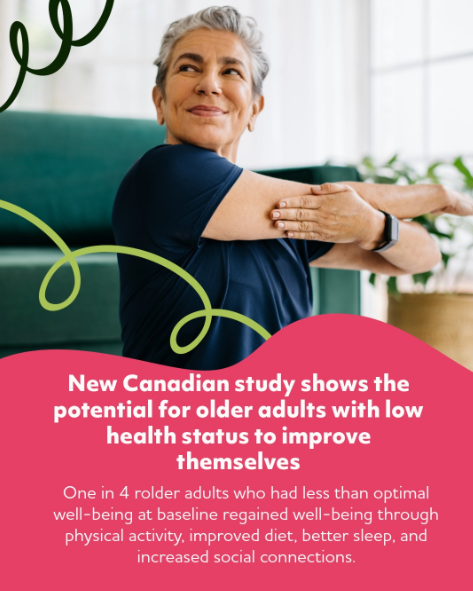
    A new study published in PLOS ONE says yes—and the findings are both hopeful and actionable for those working in geriatric care.

    Researchers analyzed data from over 8,000 older adults in the Canadian Longitudinal Study on Aging (CLSA) who were not in optimal well-being at the start of the study. Three years later, nearly one in four had regained a state of optimal well-being. That’s a powerful reminder: aging doesn’t have to mean inevitable decline.

    🔍 What Is “Optimal Well-Being”?

    In this study, optimal well-being meant more than just the absence of disease. It included:

    • Adequate social support
    • Positive self-perception of aging
    • Good physical and mental health
    • Freedom from disabling pain, cognitive decline, or limitations in daily activities

    🧠 Key Factors That Helped Older Adults Reclaim Wellness

    The study found that individuals who were:

    • Younger (within the 60+ cohort)
    • Married
    • Physically active
    • Non-smokers
    • Not obese
    • Free from chronic conditions like diabetes, arthritis, and osteoporosis
    • Financially stable
    • Without sleep problems

    …were significantly more likely to regain optimal well-being. Importantly, those who had strengths in at least two of the four wellness domains—physical, psychological/emotional, social, and self-rated wellness—had better outcomes. [journals.plos.org]

    💬 Why This Matters for Geriatric Care

    This research challenges the narrative that aging is a one-way street toward decline. It shows that wellness is dynamic, and with the right supports, older adults can recover and thrive—even after setbacks.

    For geriatric professionals, caregivers, and policy advocates, this means:

    • Investing in programs that promote physical activity and social connection
    • Screening for sleep issues and mental health concerns
    • Supporting lifestyle changes that reduce chronic disease risk
    • Creating environments that foster purpose and self-worth in aging

    🌟 Dakota Geriatrics Takeaway

    At Dakota Geriatrics, we believe in the resilience of older adults. This study reinforces our commitment to holistic, person-centered care that sees aging as a journey—not a destination.

    Let’s continue to build systems that help older adults not just live longer—but live well.

    Richardton Health Center Achieves IHI Level 1 Age-Friendly Health System Participant Status

    We are proud to announce that Richardton Health Center, located in Richardton, North Dakota, has achieved Level 1 Age-Friendly Health System Participant status, as recognized by the Institute for Healthcare Improvement (IHI). This milestone reflects the center’s commitment to delivering high-quality, person-centered care to older adults.

    🌟What Is an Age-Friendly Health System?

    The Age-Friendly Health Systems initiative is built around the evidence-based 4Ms Framework, which ensures that care for older adults is not only safe and effective but also aligned with what matters most to them:

    • What Matters: Understanding and honoring each older adult’s health goals and care preferences.
    • Mentation: Supporting cognitive health and addressing conditions like dementia, depression, and delirium.
    • Medications: Using age-appropriate medications that do not interfere with the other 4Ms.
    • Mobility: Encouraging safe movement to maintain function and independence.

    With the support of Dakota Geriatrics, Richardton Health Center has successfully integrated these principles into its care model.

    💬A Commitment to Older Adults

    By focusing on what truly matters to each individual, supporting mental and cognitive health, managing medications wisely, and promoting mobility, Richardton Health Center is setting a high standard for age-friendly care in rural communities.

     🏆Leadership Recognition: Mandy Robinson Receives Eli Pick Award

    We are also thrilled to share that Mandy Robinson, Administrator of Richardton Health Center, has been honored with the prestigious Eli Pick Facility Leadership Award. This award, presented by the American College of Health Care Administrators (ACHCA), recognizes administrators whose leadership has contributed to superior facility performance.

    👉 Learn more about the Eli Pick Award here.

    🎉 Congratulations!

    We extend our heartfelt congratulations to the entire team at Richardton Health Center and to Mandy Robinson for their dedication and leadership in advancing the health and well-being of older adults in our community.