Dakota Geriatrics, part of the HRSA-funded Geriatrics Workforce Enhancement Program (GWEP), is dedicated to advancing healthy aging through education, system redesign, and evidence‑based innovation. Their mission centers on strengthening the healthcare workforce and transforming care environments to better serve older adults. Guided by academic, clinical, and community partnerships, the program continually develops and tests new ideas that improve geriatric care delivery.
Driving Innovation in Geriatric Care
Research and innovation at Dakota Geriatrics focus on creating and implementing evidence-based strategies to enhance geriatric knowledge among healthcare professionals and integrate geriatrics into primary care settings. This includes efforts to improve dementia care, modernize primary care workflows, and build age‑friendly clinical environments that respond effectively to older adults’ needs.
A central aspect of their innovation work is transforming primary care clinics into Age-Friendly Health Systems, built around the nationally recognized 4Ms framework—What Matters, Medication, Mentation, and Mobility. The program develops curriculum, clinical tools, and microlearning resources that translate research into actionable practice for clinicians across disciplines.
Educational Research & Workforce Development
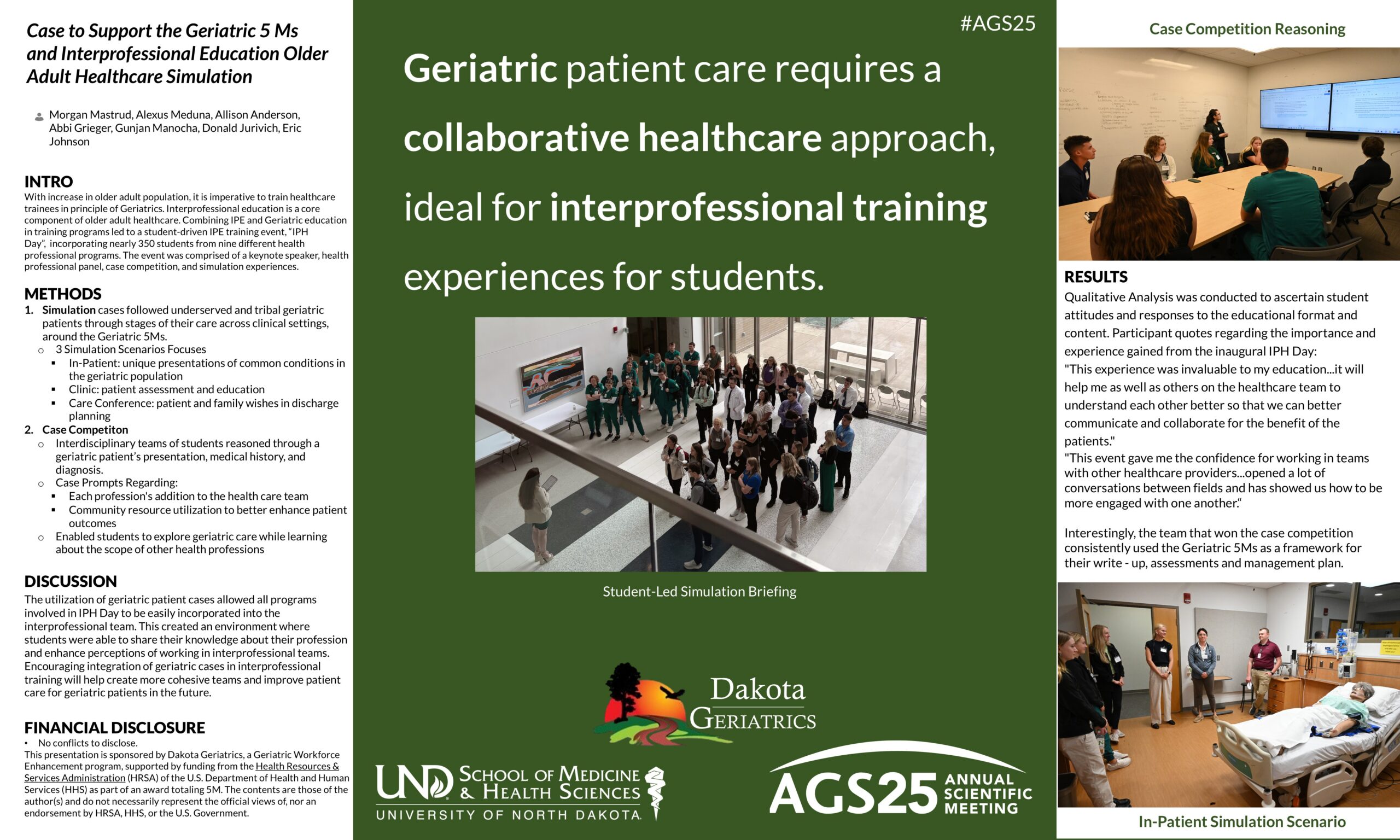
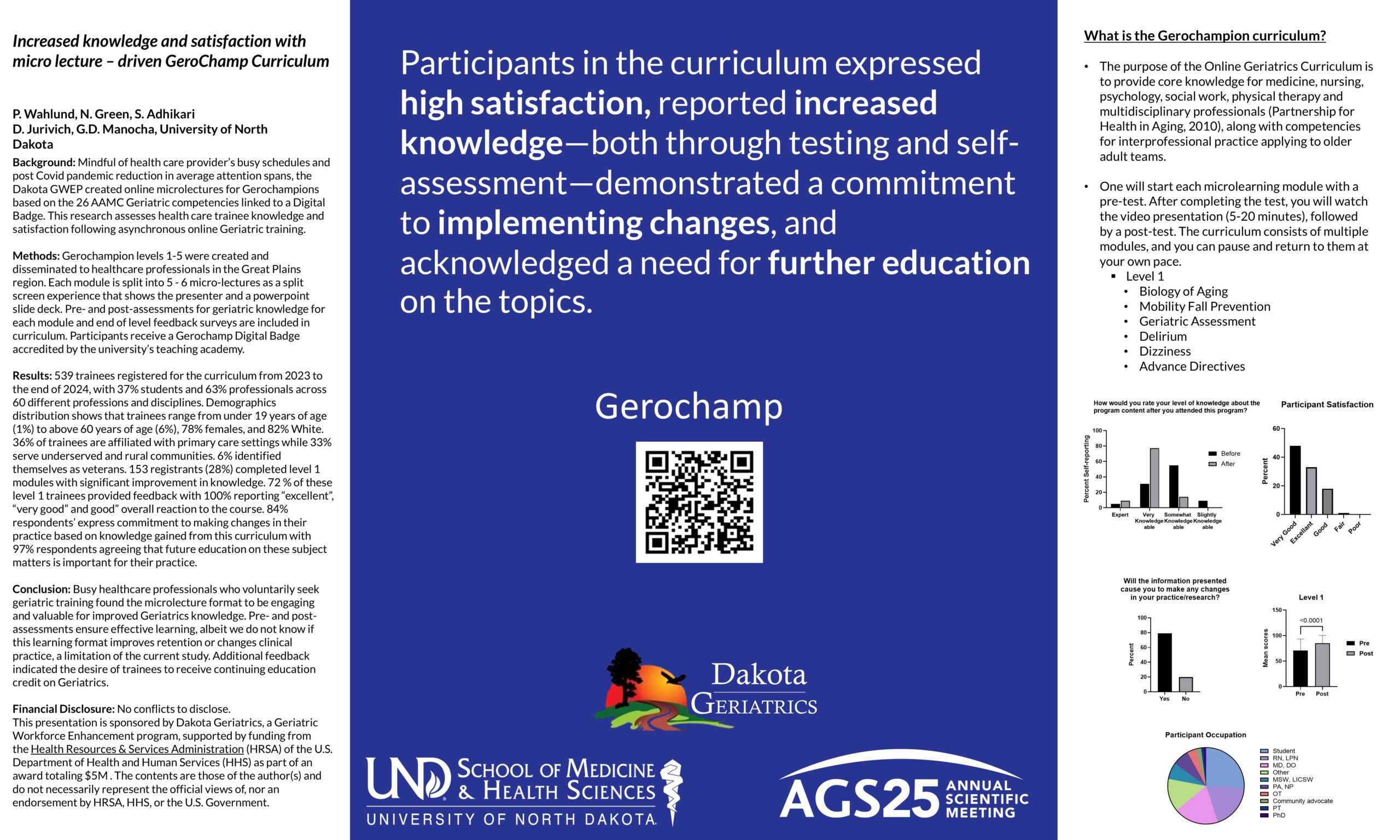
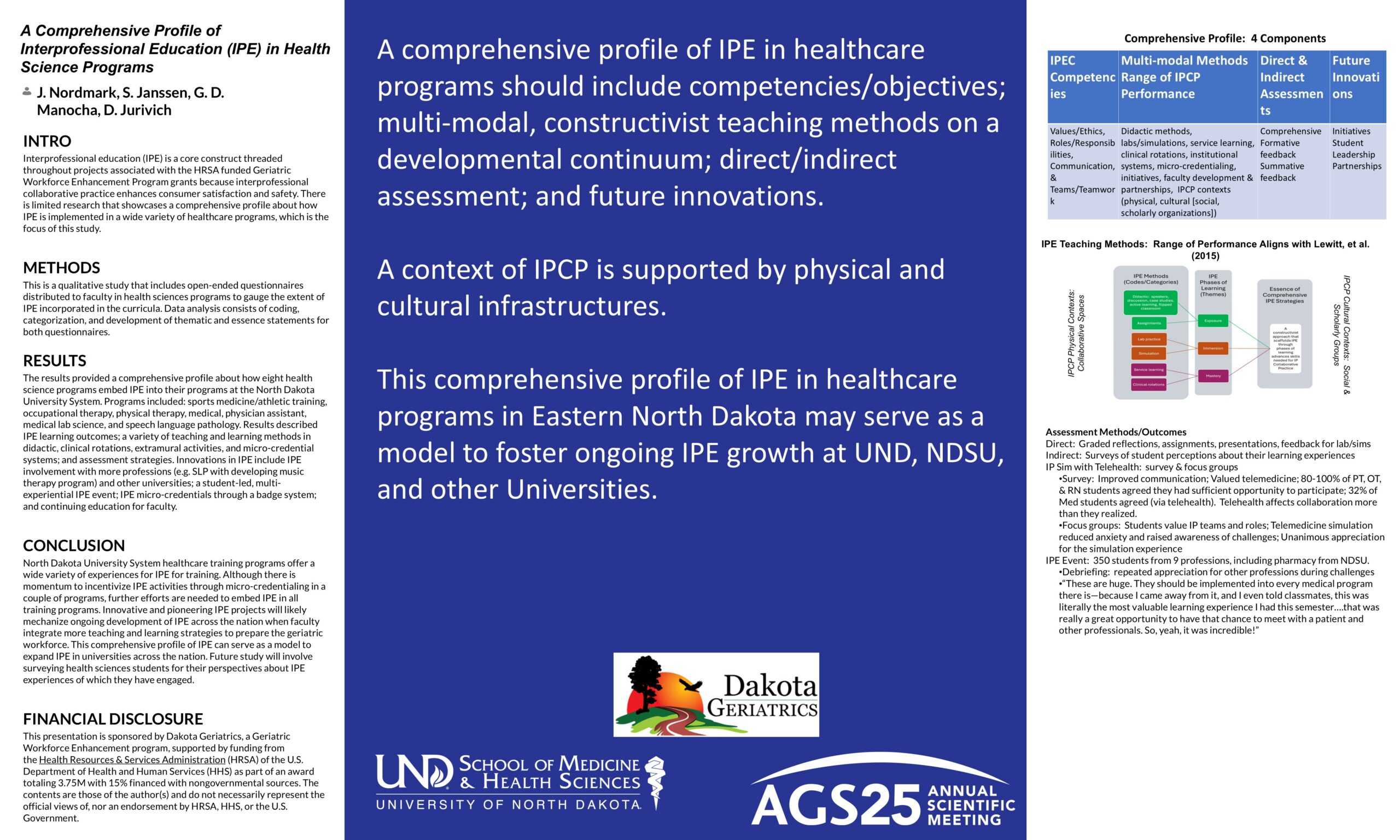
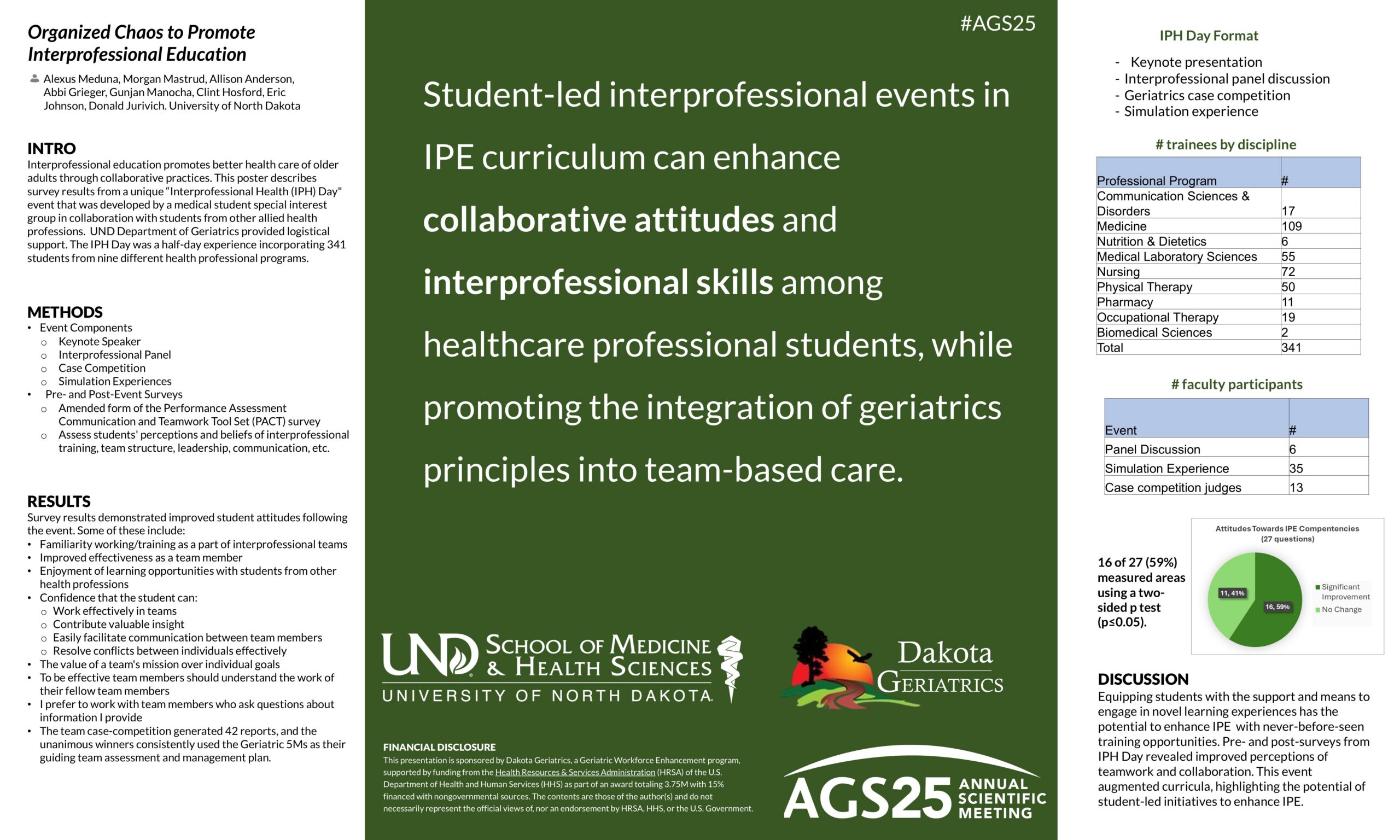
Dakota Geriatrics conducts research-driven educational initiatives to meet the needs of interprofessional learners, including physicians, nurses, social workers, psychologists, and therapists. Their online geriatric curriculum, long-term care training modules, and microlearning series reinforce evidence‑based concepts in dementia care, infection control, resiliency, and quality improvement. These innovations support ongoing workforce development and promote the adoption of best practices across care settings.
Community-Based Collaboration and System Redesign
Innovation extends beyond education—Dakota Geriatrics partners with rural and tribal health organizations to redesign healthcare delivery through age‑friendly workflows, data analysis, and quality improvement strategies. This includes operational support for implementing PDSA cycles, creating centralized data repositories, and analyzing outcomes at local, regional, and statewide levels. These collaborations help translate research into practical improvements for underserved populations.
Expanding Knowledge Through Programs & Outreach
Ongoing initiatives—such as free CME offerings and the Dakota Geriatrics ECHO Project—disseminate evidence-based knowledge and expand the reach of geriatric best practices across the region. These programs provide clinicians with regular opportunities to learn from specialists, analyze real cases, and integrate cutting‑edge insights into community care.